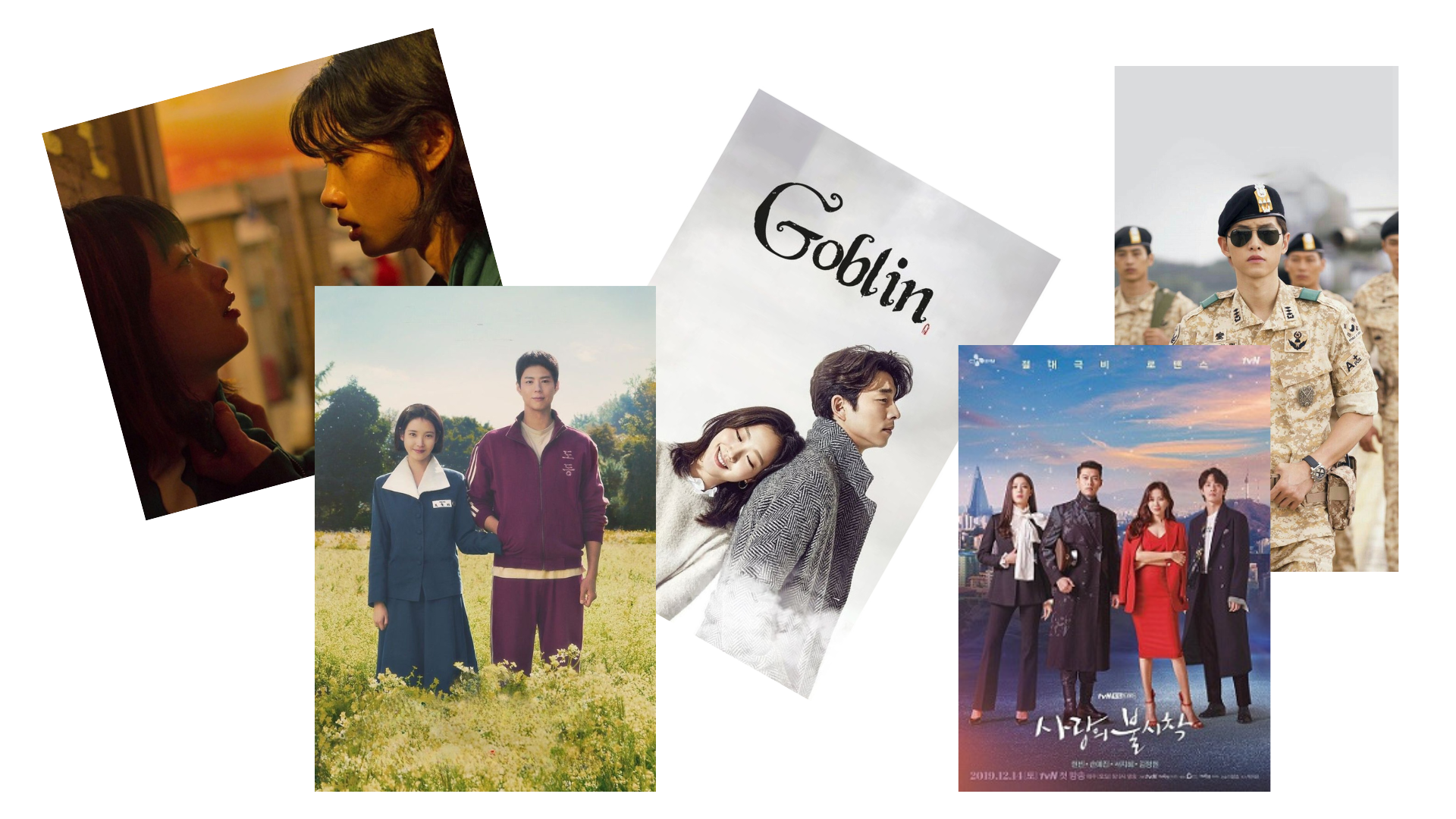
There’s a familiar moment for anyone who has ever fallen into a K-Drama late at night. A character hears a sentence that changes everything— a confession, a betrayal, a goodbye. But instead of replying right away, they stop. Their pupils tremble. Their lips part just a little, then close again. Their shoulders tense, but their hands stay frozen at their sides.
On the screen, nothing big happens. No screaming. No melodramatic collapse. Just a few centimeters of movement: eyes, lips, and a body that suddenly looks very small in the frame. And somehow, you feel it all: confusion, heartbreak, hope, denial—layered like translucent glass. This is one of the secret weapons of K-Drama: the art of micro‑emotion—the way that eye movements, lip tremors, and subtle body shifts carry feelings that subtitles can only hint at.
1) The Eyes: Where K‑Dramas Start Talking Before the Script Does
In K‑Dramas, eyes are not just part of the face; they are a language. You see it in three classic situations:
The silent realization
The character hears something shocking—maybe a parent’s lie or a lover’s secret. Their eyes don’t explode wide like in a cartoon. Instead: the gaze wavers, the pupils shift left and right, then finally lock onto something—often nothing—in the distance. This tiny delay is where the emotion lives. It’s the brain trying to catch up with the heart.
The unsaid confession
Two people stand in the rain, or in a hallway, or at the edge of a city view. One of them wants to say “I like you,” or “Don’t go,” but can’t. The eyes flicker: from the other person’s eyes, down to their lips, to the ground, then back up again. It’s a choreography of hesitation. Even before a single “saranghae” escapes, we already know.
The tear that holds on as long as it can
K‑Dramas are famous for tears, but the most powerful moment is often right before the tear falls. The eyes turn glassy. The eyelids tighten just a bit, trying to push everything back in. The character looks upward—as if physically fighting gravity, not just of the tear, but of the emotion. When the tear finally escapes, it’s proof they lost that fight.
In K‑Dramas, the eyes do three jobs at once: they prepare you for the emotion that’s about to land; they amplify what the character cannot say; and they time the emotional punch so that your heart breaks a split‑second before the tear falls. Subtitles can translate words. Eyes translate feelings.
2) Lips: Where Words Almost Happen
If eyes are the emotional screen, lips are where language almost—but not quite—appears. K‑Dramas are full of microscopic lip movements that carry huge meaning: lips part, as if to say “But…”; they press tightly together, swallowing the protest; the corner of the mouth twitches, stuck between a smile and a sob.
Think about the classic moment when someone hears: “I’ve decided to marry someone else.” The interesting part is often not the reply, but the 0.5 seconds before it: the bottom lip drops just a little; the tongue pushes against the teeth, as if starting an “아니…”—and then silence wins. This tiny physical struggle is the visual representation of self‑control. In many K‑Dramas, characters don’t explode with emotions; they fight them. The lips become a battleground between what they feel and what they are allowed to say.
In romantic scenes: the very slight moistening of lips before a kiss; a trembling smile that doesn’t fully form; a forced smile where only the lips move, not the eyes. These details do something deeper: they show that K‑Drama doesn’t just want you to know what the character feels—it wants you to feel the struggle of holding it in.
3) Body Language: The Posture of Emotion
3.1 The way people stand
In confrontation scenes, bodies rarely stand in neutral. A character might lean slightly back (withdrawal). Shoulders round inward, making an adult look suddenly small. Hands curl into fists inside pockets, a silent protest. When someone holds in rage or humiliation, they often stand too straight—like a glass about to crack. That stiffness is part of the drama.
3.2 The way people sit
On a hospital bench, in a police station, or on a childhood bed: elbows on knees, head forward (utter defeat). Upright but gripping the seat edge (nervous, ready to bolt). Curled up, hugging a cushion (childlike vulnerability). These positions say what dialogue doesn’t need to explain: “I am not okay right now, even if I say I’m fine.”
3.3 The distance between bodies
The gap between two people on a sofa after a fight; the hesitation before reaching for a hand; walking three steps behind. Space is a metaphor for emotional distance. A step closer met by a step back (mismatch). Side‑by‑side without touching (unresolved tension). A hug where one person squeezes and the other’s arms hover (one‑sided affection). The body becomes a subtitle for the heart.
4) Why Global Audiences Feel This So Deeply
Micro‑emotion is universal. You don’t need to speak Korean to understand a shoulder collapsing with bad news, lips hesitating before a confession, eyes darting when someone lies. Because K‑Dramas lean on visual, bodily details, they travel beyond language barriers.
There is a cultural layer: Korean society often values restraint in public. Characters rarely scream out feelings right away. Instead, emotion leaks through tiny cracks—a tremor in the voice, a clenched jaw, a stiff posture. Small gestures become big events. The camera knows it; directors know it; actors embody it with precision. When viewers say “K‑Dramas hit different,” this is a reason: the shows trust you to read emotion in eyes, lips, bodies—not only in words.
5) The K‑Wave Signature: Emotion in Millimeters
The power of K‑Wave isn’t only catchy soundtracks, elaborate plots, or high production value. It’s the ability to turn millimeters of movement into megatons of feeling: a 1 mm shift of the eye; a 2 mm tremor of the lip; a 3 cm gap between two people who should be closer—but aren’t. Tiny distances—but in K‑Dramas, they’re where hearts break, heal, and change.
K‑Wave doesn’t just tell stories. It invites you to watch emotion unfold in the smallest details—until your own heart is moving with it, almost as subtly, and just as deeply.