What is K-Pop? -- Part 2 Inside the K-Pop Machine
How the Idol System Was Built – and Why the World Is Trying to Copy It
Somewhere in a small city far from Seoul, a teenager is quietly packing a suitcase.
There’s a one-way bus ticket on the desk, a contract printed on cheap office paper, and a family trying to smile through the fear. If the audition had gone badly, life would have gone on: school, exams, maybe college. But the audition didn’t go badly. It went just well enough.
Now there’s a chance — tiny but real — to become the next BTS, BLACKPINK, or TWICE.
And that chance lives inside a building everyone in Korea knows by three letters: SM, JYP, YG, HYBE, and dozens more.
We like to think idols are “born to shine,” but the truth is colder and more precise: they are built.
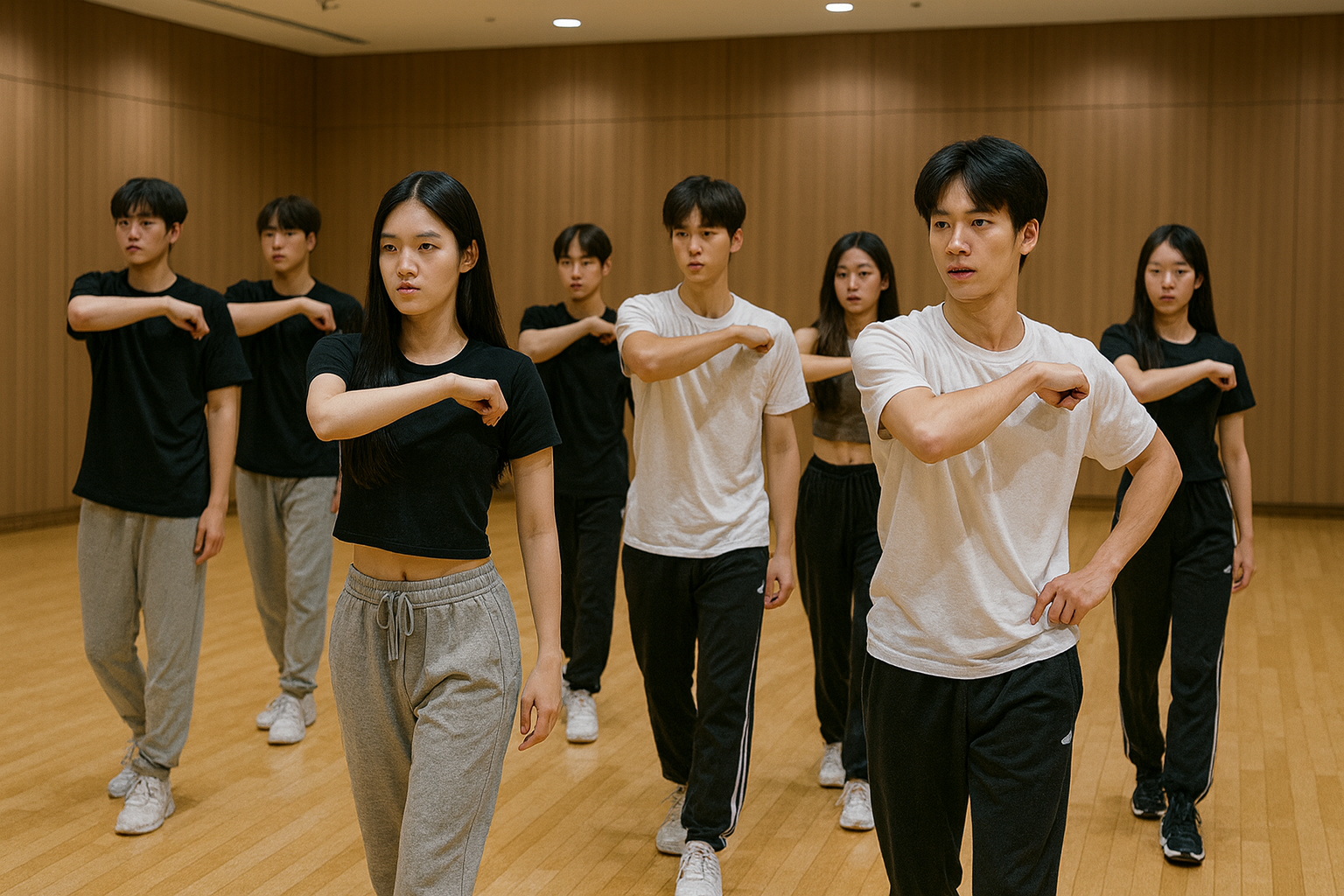
To understand modern K-Pop — and why the rest of the world is trying to reverse-engineer it — you have to walk into that building, down the hallway, and into the practice room. You have to understand the idol system.
Before the Machine: How Korea Learned to Engineer Pop
The K-Pop machine didn’t appear out of nowhere. It’s the result of a very specific history.
In the 1980s, Korean popular music was still mostly ballads, trot, and folk, broadcast through a handful of TV music programs. Singers were usually soloists, bands were rare, and choreography was optional. Pop stars were voices with faces, not full-spectrum performers.
Everything changed in the early 1990s with Seo Taiji and Boys.
They mixed hip-hop beats, rap, breakdance, American MTV aesthetics, and Korean lyrics that questioned school and society. For the first time, Korean teenagers saw a group that looked and moved like the global stars they glimpsed on imported tapes — but sounded and felt Korean.
The industry took notes.
At the same time, Korea was looking at Japan’s idol and J-Pop system:
- Companies that auditioned, trained, and tightly managed young performers
- Carefully manufactured groups designed to be marketed, not just discovered
- A long-term, company-led approach to building stars
By the late 1990s, the first wave of modern Korean idol groups exploded:
- H.O.T., S.E.S., Fin.K.L, Shinhwa, and later BoA
- Sleek choreography, matching outfits, group concepts
- Fanclubs, official colors, lightsticks beginning to appear
These acts proved something crucial: Korea could industrialize pop, not just imitate it.
That’s when the idol system really began.
The Moment Companies Stopped “Finding” Idols and Started Making Them
After the success of first-gen idols, Korean entertainment companies realized instinct wasn’t enough. They couldn’t rely on lucky discoveries, one-off hits, or artists who happened to be triple threats.
To compete with Western pop and Japanese J-Pop — and to survive in a brutal domestic market — they needed something more:
- Disciplined, not chaotic
- Systematic, not coincidental
- Repeatable, not one-time
The answer was simple and ruthless:
Don’t wait for stars. Build them.
Agencies started to:
- Scout aggressively – in schools, on streets, at dance academies
- Hold open auditions – sometimes across multiple countries
- Sign teenagers (and pre-teens) into long-term training contracts
From that point on, the history of K-Pop is basically the story of one machine being refined over and over: sharper, faster, more global… and more demanding.
Today, that machine rests on three pillars:
- The trainee system – where raw potential is engineered into idol material
- The production system – where songs, concepts, and eras are assembled
- The promotion system – where comebacks turn into multi-week events
Let’s open each one.
1. The Trainee System: Talent, Engineered
Most K-Pop idols don’t “get discovered” singing in a café.
They get discovered in practice rooms.
1.1 How Trainees Are Recruited
The pipeline looks like this:
- Street casting: Talent scouts approach teens in subway stations, shopping districts, and near schools.
- Auditions: Open calls in Korea and global “star hunts” in cities from Bangkok to Los Angeles.
- Online submissions: Dance covers, song covers, and short clips sent to casting teams.
If someone seems promising — the right look, movement, or spark — the company offers them a trainee contract.
From the outside, it looks like a dream. From the inside, it’s closer to signing up for a high-pressure boot camp with no guaranteed graduation.
1.2 Life as a Trainee: Inside the Practice Room
A typical trainee schedule is brutal:
Morning – school (for minors) or basic language classes (Korean, English, Japanese, Chinese)
Afternoon to late night –
- Vocal lessons
- Dance training (hip-hop, jazz, contemporary, popping, etc.)
- Rap, songwriting, or composition, depending on interest and company
- Stage performance practice – facial expressions, camera awareness, stamina
- Media and “character” training – how to speak on variety shows, interviews, lives
Meals? Usually rushed and controlled.
Sleep? Often sacrificed.
Weekends? Frequently another word for “extra practice.”
On top of that, trainees undergo regular evaluations:
- Monthly or quarterly assessment performances
- Individual and group rankings
- Strict feedback, sometimes brutally honest
In many companies, these results determine:
- Who stays and who gets cut
- Who gets pushed for specific projects
- Who might be considered for a new group line-up
It’s harsh — and controversial.
Many trainees spend three, five, even seven years in this limbo and never debut.
But for the industry, the logic is clear:
- Pressure filters talent.
- Training creates consistency.
- Long-term practice forges teamwork.
1.3 What the Trainee System Produces
From fans’ point of view, the trainee system produces three key things.
Technical Skill
That jaw-dropping precision you see in BTS, BLACKPINK, or TWICE choreography? It’s not magic. It’s thousands of hours of synchronized practice.
- Clean formations
- Sharp transitions
- Stable live vocals layered over intense choreo
The bar for “acceptable” performance in K-Pop is higher than in almost any other mainstream pop industry.
Team Chemistry
Most idol groups didn’t just meet yesterday.
They:
- Trained together
- Shared dorms
- Survived evaluations side by side
By the time they debut, they often know each other’s strengths, weaknesses, and rhythms better than their own family.
That’s why K-Pop groups often feel less like “bands” and more like precision units — each member a different piece of a machine that only works when everyone moves together.
A Growth Story
Fans don’t just fall for finished products. They fall for progress.
The trainee system naturally provides a narrative:
- The shy kid who couldn’t make eye contact with the camera becomes a confident center.
- The trainee who was always last in dance rankings turns into the group’s main dancer.
- The vocal who doubted herself hits impossible notes on a live stage.
Once documentaries, reality shows, or pre-debut content reveal these journeys, fans connect on a deeper level. They’re not just listening to music; they’re witnessing a transformation they feel invested in.
That emotional investment becomes the fuel of K-Pop fandom — something we’ll unpack more in the fandom article.
2. The Production System: Pop as Engineering
Behind every K-Pop title track, there is an invisible factory.
We see:
- A three-minute MV
- A stage with perfect choreography
- Slick styling and a memorable chorus
What we don’t see is the engine that put all those pieces together.
2.1 Songwriting Camps and Global Collaboration
Modern K-Pop is built in songwriting camps:
- Producers and songwriters from Korea, the U.S., Europe, and beyond gather (physically or virtually)
- They trade melodies, beats, toplines, hooks, and structural ideas
- Dozens of demos might be written for one comeback
The goal isn’t just to find “a good song.” It’s to find a song that fits:
- The group’s concept
- The members’ vocal colors and ranges
- The overall story arc of the new era
Once a title track is chosen, the B-sides are often selected to build a cohesive mini-universe:
- A fan-loved B-side that deepens the group’s emotional side
- A performance track that might become a tour highlight
- A unit song that showcases specific members
2.2 Roles Inside the Group: Why Not Everyone Sings the Same Way
Another signature of K-Pop: role specialization.
Groups aren’t just “five people who sing.” They’re structured like teams, where each position plays a specific role.
Common roles include:
- Main vocal – strongest technical singer, handles big belts and climaxes
- Lead vocal – often takes pre-choruses and memorable lines
- Main dancer – center of choreo-heavy moments, dance breaks
- Lead dancer – supports main dancer, often front in formations
- Rapper – brings rhythmic contrast, personality, and edge
- Visual – often used heavily in MVs, photoshoots, brand work
- Center – the member who naturally draws the camera, often positioned literally at the center during choruses
- Leader – responsible for cohesion, communication, and representing the group
This structure isn’t rigid, but it gives producers and choreographers a clear map:
- Who should open the song
- Who should own the killing part
- Who should dominate which section of the stage
It’s pop as engineering, not guesswork.
2.3 Concept and Era Design: Not Just a Song, but a Story
K-Pop doesn’t think in “singles.” It thinks in eras.
For each comeback, the creative team defines:
- Concept – cute, dark, dreamy, cyberpunk, school, villain, fairy, Y2K, etc.
- Color palette – visuals for MVs, stage sets, album art, social feeds
- Fashion direction – styling for teasers, stages, and promotions
- Narrative – explicit lore (some groups) or emotional theme (youth, rebellion, heartbreak, empowerment)
The title track, B-sides, visuals, choreography, and album packaging are designed to feel like pieces of one story.
That’s why fans talk about eras — “Love Yourself era,” “Born Pink era,” “TT era,” “Cheer Up era,” “I CAN’T STOP ME era” — as if they’re seasons in a TV show. Each one feels distinct.
2.4 Why K-Pop Feels So “Complete”
When a new release drops from groups like BTS, BLACKPINK, TWICE, or any well-produced act, it rarely feels like “just another single.” It feels like a self-contained world:
- A visual identity
- A sonic palette
- A narrative arc
- Specific emotional keywords
That sense of completeness is not accidental. It’s the result of production treated as engineering — where every detail is part of a larger design.
For non-Korean companies trying to build “K-Pop–style” acts, this is the hardest part to copy well. It’s not enough to write one catchy track. They have to build a whole era fans can emotionally move into.
3. The Promotion System: When a Comeback Becomes an Event
In the early days of Korean music TV, a promotion strategy was simple: release a song, perform it on a few shows, maybe appear on a variety program, and hope for the best.
K-Pop turned that into something far more advanced: a scripted sequence of hype.
3.1 The Modern Comeback Timeline
A typical K-Pop comeback unfolds like this:
- Comeback announcement
Company drops a poster or teaser image with a date. Fandom calendars get updated, global plans begin. - Concept photos & films
Multiple versions, individual member shots, group shots, and short concept videos. Fans dissect outfits, makeup, colors, and props for clues. - Tracklist reveal
Title track name revealed; B-side titles spark theories and anticipation. - Highlight medley
Snippets of all tracks, like a movie trailer for the album. - MV teasers
15–30 seconds each, often two teasers, just enough to hint at the chorus and mood. - Album & MV drop
Full MV release, digital album on streaming platforms, physical album pre-orders convert to sales. - Music show stages
Different outfits and styling each week, camera work optimized for fanchants and viral clips. - Variety & reality content
Game shows, talk shows, self-produced content, behind-the-scenes, choreography practice, reaction videos. - Social media challenges
TikTok/Reels/Shorts dance challenges; fan participation content, covers, edits.
Promotion becomes a multi-platform story fans can follow, share, and contribute to.
3.2 Promotion as an Art Form
In K-Pop, promotion isn’t a side process; it’s part of the creative craft:
- Teasers are shot like mini films
- Concept photos look like magazine spreads
- Dance practice videos become iconic artifacts in their own right
Each piece of content:
- Reinforces the concept
- Keeps the group constantly visible
- Gives fans something to talk about, edit, and share
For companies, it’s hyper-efficient: one comeback fuels weeks — sometimes months — of online and offline engagement.
For fans, it feels like living through a season of their favorite series.
Why This System Matters Globally
From a distance, the K-Pop idol system can look excessive:
Why so much training?
Why so many teasers?
Why so many photos, versions, and stages?
But from a business and cultural perspective, it’s a hyper-efficient machine. It:
- Engineers high-quality idols with consistent performance standards
- Produces coherent concepts that are easy to brand and remember
- Generates continuous content, keeping fans emotionally locked in
- Creates a template that other countries can observe, study, and adapt
So when non-Korean companies talk about building their own “K-Pop style” group, they are almost never copying just the sound.
They are copying:
Trainee model + production pipeline + comeback-driven promotion.
That is, they’re copying the system.
And that tells us something important about where we are now:
The world isn’t just listening to K-Pop. It’s studying K-Pop. Reverse-engineering the training. Imitating the comeback rhythm. Trying to bottle the same intensity of fandom.
Whether they succeed or not is another question. But the mere fact that they’re trying — building academies, forming multi-member dance groups, mimicking teaser schedules — is proof that the K-Pop machine has become the benchmark for how to mass-produce modern pop idols.
In the next article, we’ll look at the other half of this machine: fandom — the millions of people who watch, stream, trend, translate, organize, and sometimes cry over the idols that this system produces, and who, in their own way, have become co-producers of pop.
Article 2 – Crawler Tags
BTS, BLACKPINK, TWICE, K-Pop trainee system, K-Pop idol system, K-Pop production, K-Pop comeback, Idol training, Korean entertainment companies, K-Pop industry, Seoul
Article 2 – Hashtags
#Kpop #KpopIdols #KpopTrainee #KpopTraining #KpopSystem #KpopComeback #KpopIndustry #Hallyu