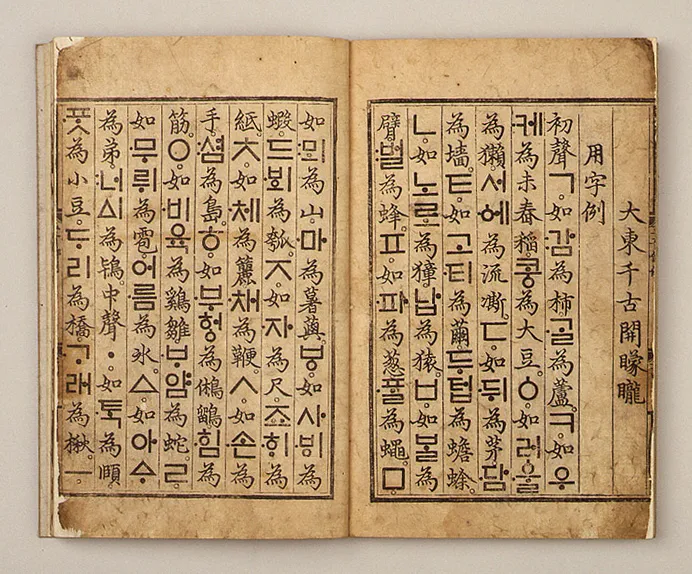
3) Mimetic Words as Hooks: When Language Becomes a Sound Effect
Korean is full of mimetic words (의성어·의태어) that imitate sound, movement, and emotion: dugeun‑dugeun (두근두근, heart pounding), bbanjjak‑bbanjjak (반짝반짝, sparkling), juruk‑juruk (주룩주룩, pouring rain), sallang‑sallang (살랑살랑, softly swaying). K‑Pop drags them onto the stage.
3.1 Visual + sonic = instant hook
These words are easy to repeat, fun to mouth, and visually descriptive even without translation. Lines like “dugeun dugeun,” “bbang bbang,” “bbom bbom,” “jjing jjing” read like sound effects. Producers place them in pre‑chorus builds, post‑chorus anti‑drops, and dance breaks so the word becomes a signature motif—what fans shout at concerts and clip for TikTok.
3.2 Emotion as rhythm
Dugeun‑dugeun isn’t just “my heart is beating fast”—it is the feeling in sound. Idols don’t only narrate emotion; they perform the sensation itself, which is why global audiences feel it instantly.
4) The Korean–English Blend: Hybrid Hooks That Travel
Modern K‑Pop is bilingual by design. English appears in titles, hook phrases, one‑word emotional punches (“love,” “sorry,” “baby,” “lonely”), and chants. The magic is the fuse point where Korean sound and English meaning become one hook.
4.1 Internal rhyme and matching shapes
Writers pick English words that fit Korean phonetic patterns—“lover/better/forever/never,” “crazy/baby,” “sorry/party/story”—beside Korean phrases like saranghae, geurae, eojjeom, mollae, gwaenchanha, neowa na, uri, yeogi. The back‑and‑forth creates internal rhyme across languages, smoothing the line even if you only catch half the meaning.
4.2 English as anchor, Korean as color
Choruses often anchor on an English keyword—“love,” “danger,” “fever,” “lonely,” “feeling”—while the surrounding sentence is in Korean. For new listeners, the English acts as a fast emotional label; Korean supplies rhythm and flavor. Over time, repeated Korean phrases—hajima, gajima, eotteokhae, wae geurae, saranghae, bogoshipo—become part of a fan’s mouthfeel.