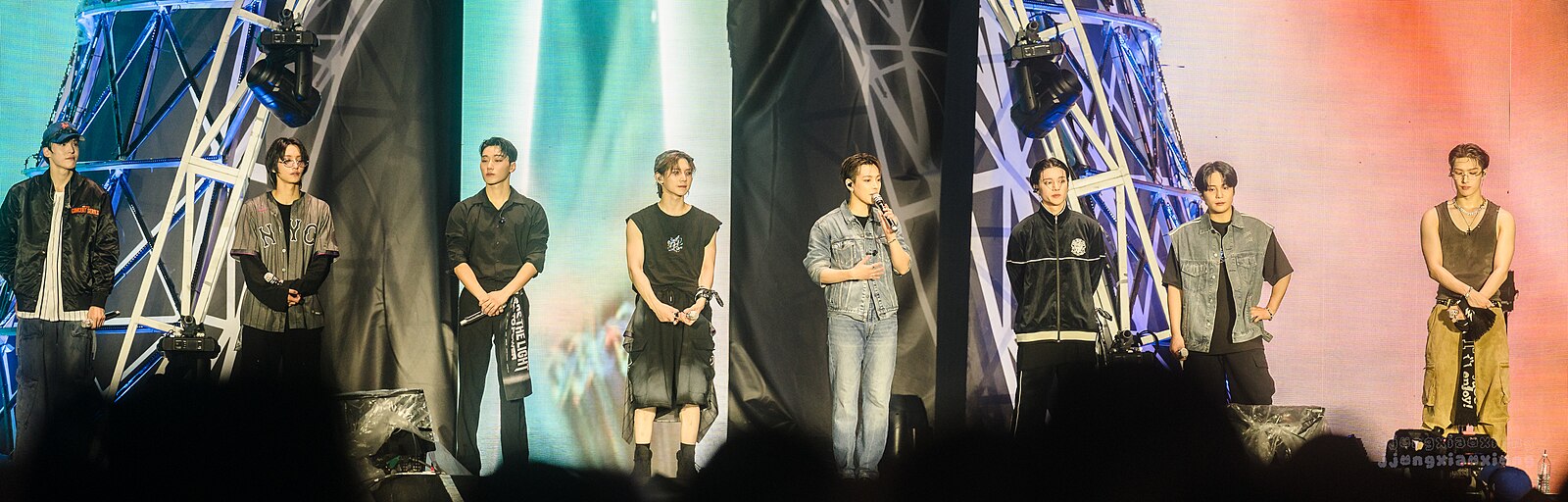
When fans say a choreography “hits,” they’re not only talking about timing or difficulty. They’re talking about meaning. K‑Pop built a dance language where levels, facings, pathways, and breath act like punctuation—periods, commas, ellipses. Eight counts can confess, deny, seduce, or mourn. You don’t have to speak Korean to understand it. Your body decodes it first.
1) Formations: Who Speaks, Who Echoes, Who Witnesses
In a typical verse, formations stage a dialogue. A center soloist “speaks” while flanks become witnesses. When the chorus lands, the group closes ranks—emotion goes public. Two common devices carry story:
- Canon: one member starts, others follow one beat apart. It reads like a thought spreading through a crowd—hesitation turning to certainty.
- Ripple: movement travels across the line like a wave. It feels like a shiver of recognition, or a rumor turning into truth.
Even without lyrics, you can tell when the song admits something versus when it tries to hide. The floor plan betrays it.
2) Levels and Facings: Volume Knobs for Feeling
Choreographers treat vertical levels as emotion dials. Drops to the floor announce collapse or surrender; mid‑level crouches signal readiness or threat; full height with open chest reads as resolve. Facings work like camera angles: facing front invites you in; diagonal facings feel secretive; facing away with a glance over the shoulder looks like regret. Combine them, and the dance “says” what the character can’t.
3) Hands and Micro‑counts: Grammar You Feel, Not See
Pop‑and‑retract on 16th notes feels like a racing heart. Soft palms on 1‑and‑2‑and float like doubt. Fingers brushing the jaw or collarbone often underline vulnerability; a palm over the sternum is the universal “it hurts here.” The smallest micro‑count—a half beat of stillness before the drop—can make a chorus feel like a decision finally made.
4) Breath and Weight: The Invisible Metronome
Great teams breathe together. You can hear it in rehearsal footage: inhale before the lift, exhale on the contact. Breath cues synchronize intent and help viewers anticipate impact. Weight is the other invisible tool: grounded steps read heavy and honest; light rebounds feel playful or evasive. In ballads, weight sinks; in defiant tracks, it stomps.
5) The Face as a Close‑Up for the Whole Group
K‑Pop borrowed an actor’s instrument. A single raised eyebrow at the center can re‑color an entire chorus performed by eight people. Micro‑acting—eyes that narrow on the snare, a mouth that half‑smiles on a syncopation—turns choreography into narrative, not drill. It’s not “faces for fancams.” It’s dramatic timing.
6) Why It Travels
Because this dance language is embodied, it crosses borders. A fan in Manila or Manchester instantly reads the emotion arcs: who speaks, who answers, who resists. The export isn’t only music; it’s a readable grammar of motion refined by idols, choreographers, and directors who treat the stage as a moving script.